

- Human Handoff block — An action block that transfers the conversation to a human agent when reached in the flow.
- Intent trigger — Detects when a user’s message matches a specific intent (e.g. requesting human support) and routes the conversation to the handoff block.
If you’re unfamiliar with the Builder, refer to the Builder introduction first. For intents, see Introduction to Intents.
Set up automatic handoff
This guide walks you through setting up an automatic handoff that triggers when the AI detects the user wants to speak with a human agent.Step 1: Create a handoff intent
First, create an intent that defines when the conversation should be handed off.- Go to your chatbot’s dashboard and open the Builder page from the sidebar.

- Click on the
Intentsbutton in the top left.
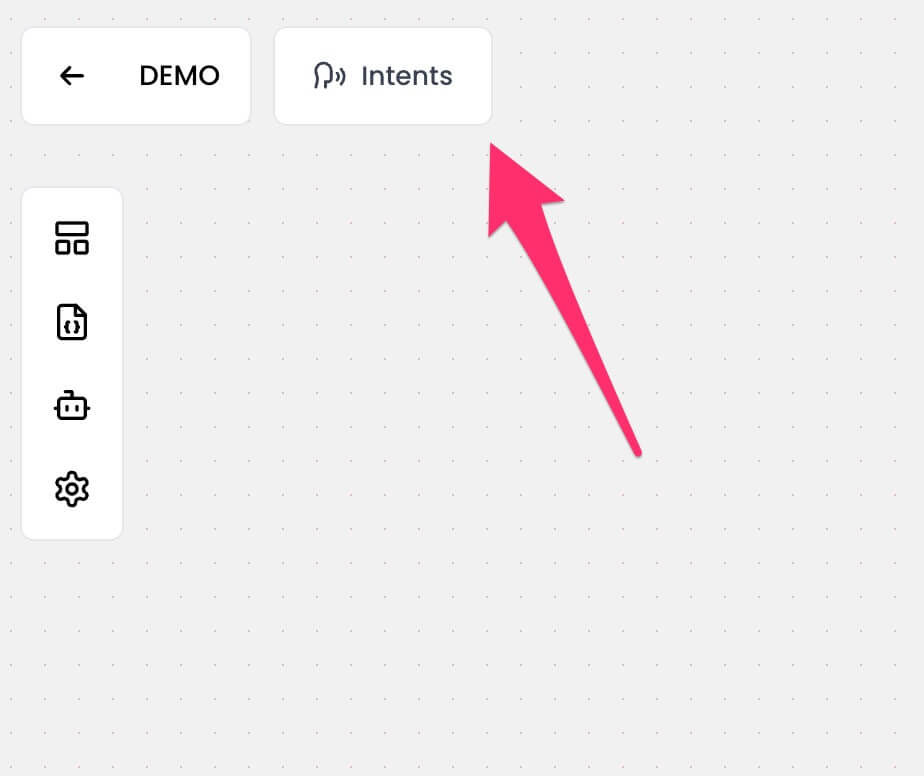
- Click the
Templatesbutton in the top right. - Select the Human agent / Live support template. This creates a pre-configured intent with common phrases like “live agent” and “speak with human”.

- Click the
Create intentbutton.
Step 2: Add an Intent trigger block
Next, add an Intent trigger block to the canvas so the chatbot knows what to do when the handoff intent is detected.- Open Blocks from the sidebar.
- Under the Triggers section, drag and drop the Intent block onto the canvas.

- Click on the intent block to open its editor.
- Select the Human agent / Live support intent from the dropdown.

Step 3: Add a Human Handoff block
Now add the block that will actually transfer the conversation to a human agent.- Open Blocks from the sidebar.
- Under the Actions section, drag and drop the Human Handoff block onto the canvas.

- Click the block to open its editor and configure the following settings:
- Auto-assign priority: Automatically assign a priority level to the conversation.
- Handoff confirmation message: Automatically generate and display a confirmation message to the user when the handoff is initiated.
- Agent routing: Route the handoff to a team queue or automatically assign an agent. See Agent routing.
Step 4: Connect the blocks
Connect the Intent trigger to the Human Handoff block so the handoff is executed when the intent is detected.- Drag a connection from the Intent trigger block to the Human Handoff block.

Step 5: Enable intent matching on input blocks
Finally, tell the chatbot to check for the handoff intent when users send messages.- Open the input block where users enter their queries (e.g. a Capture Text block).

- Under the Match intent section, click the + icon.
- Select the Human agent / Live support intent.
 Now, whenever a user sends a message through that input block, the chatbot will check if it matches the handoff intent. If it does, the Intent trigger fires and the Human Handoff block is executed, transferring the conversation to your team.
If no intent matches, the chatbot continues with its normal flow.
Complete flow
Your finished flow should look something like this:
Alternative: Manual placement
You don’t have to use intents for handoff. You can place the Human Handoff block anywhere in your chatbot flow and connect it directly to other blocks. For example, you could:- Connect it after a Buttons block where one option is “Talk to a human”.
- Place it at the end of a troubleshooting flow as a fallback when the chatbot can’t resolve the issue.
- Trigger it from a Condition block based on a variable value.
What happens after handoff
Once the handoff is triggered:- The conversation is flagged as Needs agent intervention in the Conversations page.

- An AI summary of the conversation is generated for the agent.

- If notifications are enabled, your team will be notified.
- A team member can then pick up the conversation and reply directly.
Next steps
Agent routing
Route handoffs to a team queue or automatically assign an agent.
Availability
Set office hours and reply time for your team.
Notifications
Configure notifications for your team.
Managing Conversations
Learn how to manage handed-off conversations.